As winter approaches and temperatures drop, stuffy noses are likely to become more common. If, however, you notice that your congestion seems especially bad this year, no matter what you do, then the issue might be more than just dry, cold air; it could be a structural issue within your nose. It may be a deviated septum.
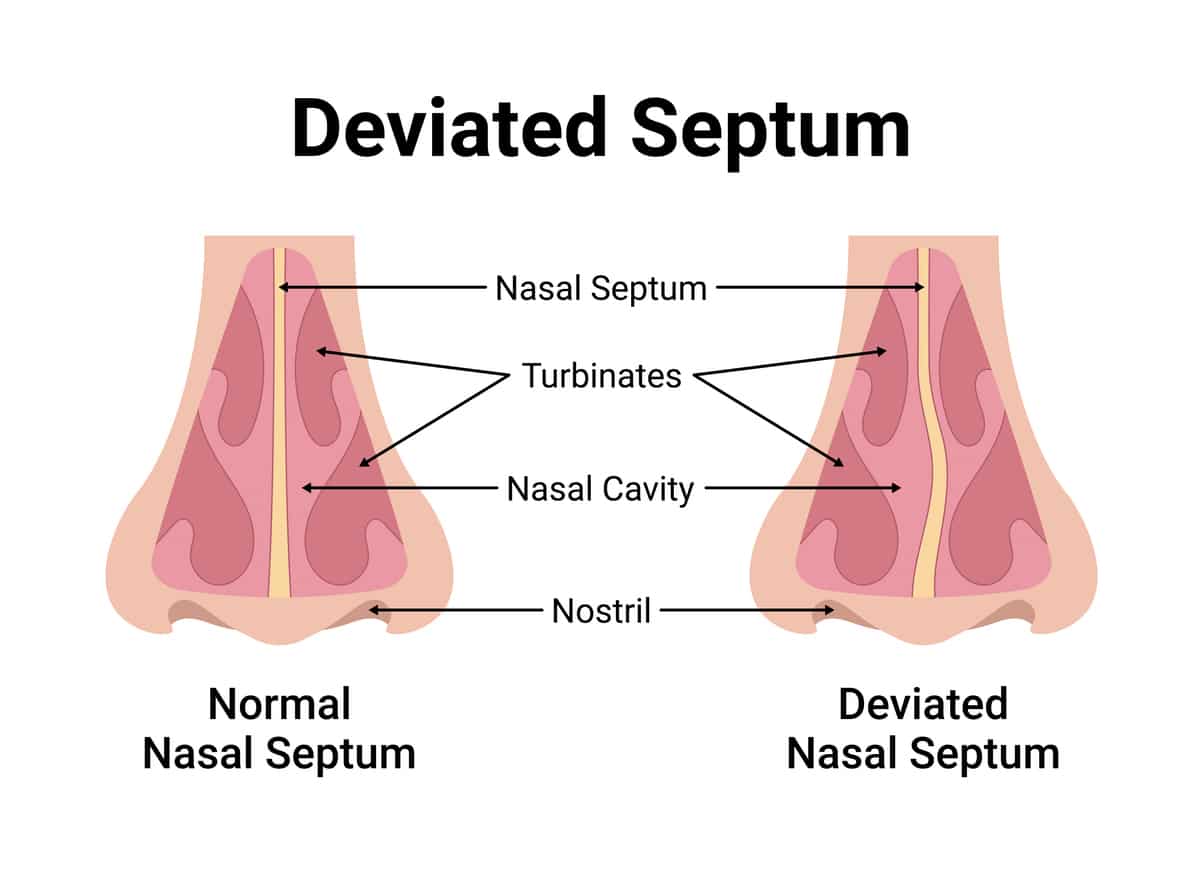
What Is a Deviated Septum?
The wall between your two nostrils is called your septum. This wall is made of cartilage and bone, and it extends from the opening of your nose at the nostrils up into the nasal cavity.
This wall is rarely perfectly straight—about 80% of people have a nasal septum that is a little off-center—but if the wall is very crooked or has a more pronounced bend to it, it’s known as a deviated septum. Severe cases of a deviated septum may cause one or both of the nasal passages to become obstructed.
What Causes a Deviated Septum?
A deviated septum may be a result of an injury or trauma to the face, like a car accident or sports injury. It may also be congenital (e.g., acquired from birth).
How Can I Tell If My Sinus Issues Are Connected to a Deviated Septum?
If you’ve been struggling with sinus issues and are wondering if a deviated septum is the root cause, consider the following:
- Cause. If you’ve been in an accident or suffered an injury recently that affected your nose, it could be a deviated septum. If there’s been no injury, then it could be inflammation in the sinuses caused by a viral or bacterial infection or allergies.
- Symptoms. A deviated septum is characterized by obstructed nasal passages, so reduced airflow, noisy breathing, mouth-breathing, snoring and nosebleeds could all indicate a deviated septum. If your symptoms feature more mucus and facial pressure, it’s probably a sinus infection.
A deviated septum can be associated with sinus infections (also known as sinusitis), so the symptoms of the two conditions can appear very similar. However, by looking for the differences as outlined—such as cause and presence of mucus—you can differentiate which is the core issue.
How Do I Treat a Deviated Septum?
Medications and other treatments at home can provide relief from a deviated septum, although they cannot straighten or correct the nasal septum. Some of these measures include:
- Decongestants or antihistamines, which will relieve nasal congestion.
- Saline sprays, which clear mucus and hydrate the skin in the nasal passages.
- Nasal corticosteroid sprays reduce inflammation. These are available both over-the-counter and by prescription.
If you’ve tried these measures and the problem isn’t going away, it may be time to consult an ENT specialist. They can prescribe more potent medications or perform a surgical procedure known as septoplasty to realign the deviated septum. Contact Lakelands ENT today to learn more or schedule an appointment.
