Concerned that your child has hearing loss? It can be a little hard to identify at first, even if you’re watching for it. As a condition, hearing loss is somewhat unique because a child’s sense of hearing contributes so much to how they learn, socialize and develop. That’s why it’s critical to catch hearing loss early so that treatment can begin.
How Hearing Loss Can Affect a Child’s Development
Children are constantly learning, even when it doesn’t seem like it. They’re always consuming information from the world around them to learn how to speak, feel, play, understand, rationalize and ultimately function as a person in a community.
Listening is a vital part of all of that. Children learn by listening to stories, attending lessons at school, hearing how adults talk to each other, playing games with their peers and much more, so when a child has difficulty hearing and listening, it can disrupt that learning and development.
The good news is that hearing loss is treatable! Truly, we’re not telling you all this to cause you worry or make you feel as though your child is severely disadvantaged if they have hearing loss. What we want to emphasize is that these effects will be most pronounced if hearing loss is left untreated. The earlier you know about their hearing loss, the sooner you can make sure your child benefits from strategies that will help him or her learn to communicate.
Signs of Hearing Loss in Children
Children are extremely adaptable, so they may not realize that things don’t sound the way they ought to. Moreover, you as an adult might not recognize the signs of hearing loss, because they can be different from how an adult presents hearing loss.
Some signs to watch out for include:
- Frequently asking for repeats
- Ignoring you when you call them
- Talking louder than they need to
- Your child complaining that their ear feels “funny” or “full” or “plugged”
- Constantly touching or tugging on their ears
- Not turning towards sound (especially for infants)
- Doesn’t seem to startle at sudden loud noises
- Slowed development in speech and language (e.g., learning language slowly, talking slowly or not speaking at all)
- Extreme fatigue at the end of the day, especially after school, which is an intensive listening environment
- An aversion to socializing (note: use this sign in tandem with others, as it could also indicate something else, like autism, or your child may simply be shy)
Also note that signs are going to be different depending on your child’s age.
How to Detect Hearing Loss
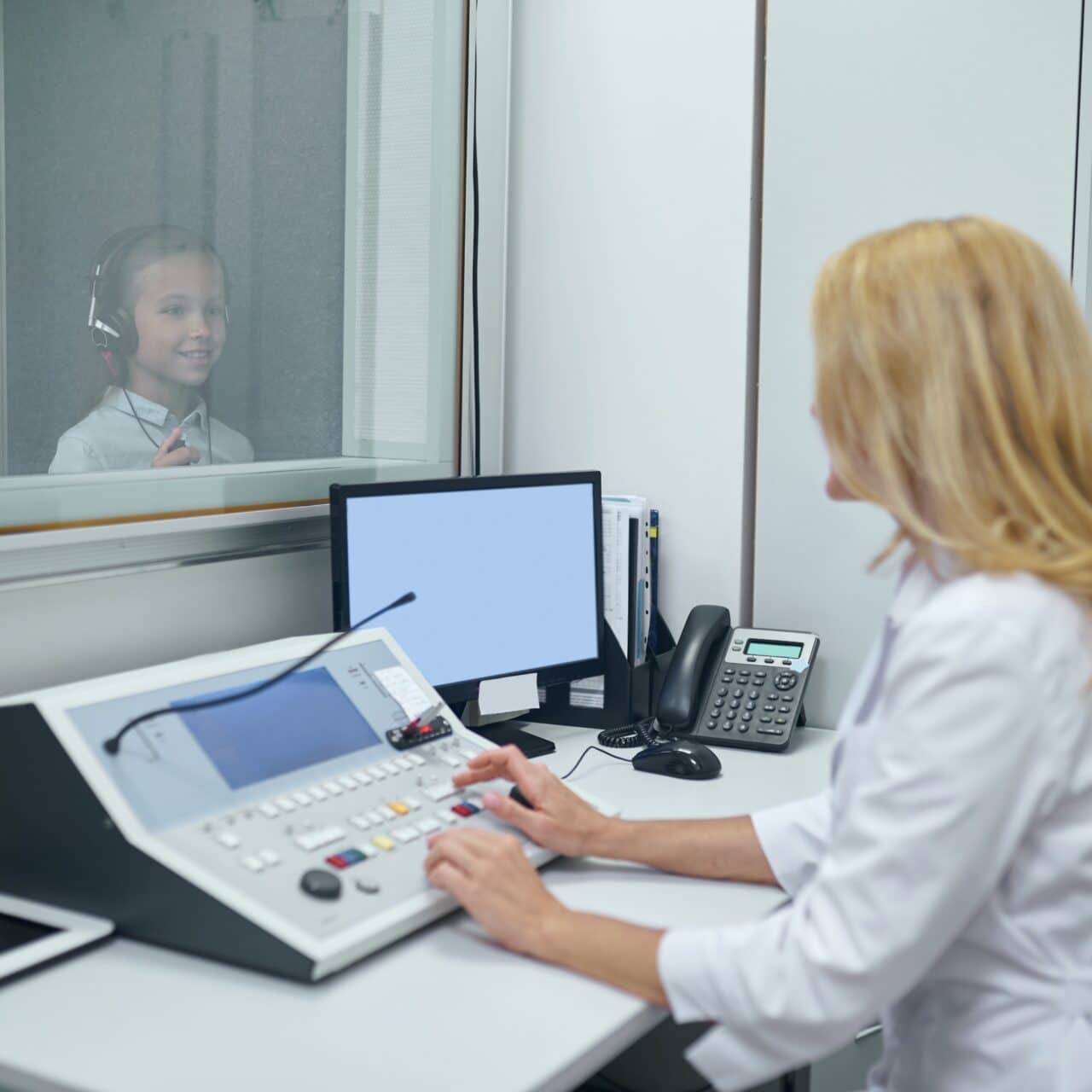
No matter the age, hearing loss is detected with a hearing test. These tests will identify weaknesses, disorders or structural abnormalities in the ear that could affect hearing.
Your baby should have been given a hearing test a few hours after birth, in the hospital. This will identify congenital (present at birth) hearing loss. All babies receive this screening, even those born to hearing parents. In fact, more than 90% of babies with hearing loss are born to hearing parents. If your baby doesn’t pass this initial screening, they should have a follow-up test with an audiologist before they are three months old.
Throughout their infancy and early childhood, you’ll need to monitor traditional developmental milestones and watch your baby for signs of hearing loss (as listed above). If you notice any signs, bring it up with your pediatrician, and they may refer you to an audiologist for a hearing test. As discussed above, don’t wait; bring it up as soon as you suspect there may be an issue, because early detection allows early intervention!
At Lakelands ENT, we want to be a resource for you and your child for their hearing health. Whether you’ve been referred to us for a pediatric hearing test or you have a child with an official diagnosis of hearing loss who needs hearing aids, we’re here to help. Call us today to meet with our skilled team and be proactive about your child’s hearing health!
