The easiest way to think about the difference between hearing loss and tinnitus is with a real-life example.
Hearing in Action
When you hear a bird call, the sound waves are funneled into your auditory canal by your ear, turned into electrical signals between your auditory canal and brain, and processed by your brain as a bird call.
Hearing loss is a measure of the reduction in your body’s ability to hear and interpret actual sound, like a bird call. A hearing test can determine how well your sound wave-to-brain wave processing is compared to averages for your demographic.
Tinnitus in Action
Tinnitus occurs when your brain interprets something as a sound, but it isn’t caused by an external identifiable source. Because our brains process external sound into electrical signals, there isn’t a way for medical practitioners to reverse this process and ‘hear’ what a tinnitus sufferer’s brain is interpreting as sound.
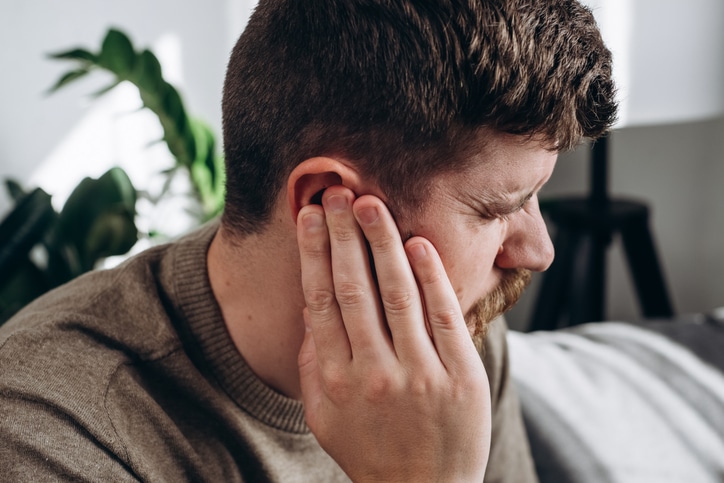
Tinnitus isn’t measurable in the same way hearing is, and because tinnitus isn’t related to an actual sound wave, there isn’t a way to ‘quiet’ it in the same way sound can be amplified in the treatment of hearing loss.
How Commonly Do Hearing Loss and Tinnitus Co-Occur?
According to the CDC, about 1 in 25 people in the U.S. working population has both hearing difficulty and tinnitus.1
What Do Studies Indicate?
The Canadian Society of Otolaryngology, Head and Neck Surgery studied the link between hearing loss and tinnitus among noise-exposed workers in the US from 1999 to 2020.2
Their study found that tinnitus prevalence increased with prolonged noise exposure and greater hearing loss severity. This increase was reduced by using hearing protection, creating a credible connection between hearing loss, tinnitus, and noise exposure.
Additional studies have reviewed how tinnitus symptoms might correlate with other factors and identified similar increases in tinnitus in workers exposed to loud noises.3
As loud sustained noise can also cause hearing loss, it makes sense that the two conditions would correlate most strongly when workplace-related noise exposure is closely examined.
What Can You Do Next?
Receiving an evaluation for tinnitus or hearing loss is the starting point you’ve been looking for. It can help confirm your symptoms using evidence-based medical methodologies and provide you with a path forward for managing your condition.
Hearing loss is progressive, and tinnitus rarely resolves on its own. We’re here to support you with management solutions and ongoing assistance that can change your outlook and life for the better.
Sources:
1 Centers for Disease Control and Prevention. “About Occupational Hearing Loss.” https://www.cdc.gov/niosh/noise/about/index.html
2 Yang, S.-W., Xu, W., Chen, L., & Fang, S.-B. (2025). Associations between tinnitus and hearing loss among noise-exposed workers in the United States from 1999 to 2020: A cross-sectional study. Journal of Otolaryngology – Head & Neck Surgery, 54, 1–13. https://doi.org/10.1177/19160216251347597
3 Bhatt JM, Lin HW, Bhattacharyya N. Prevalence, Severity, Exposures, and Treatment Patterns of Tinnitus in the United States. JAMA Otolaryngol Head Neck Surg. 2016;142(10):959–965. doi:10.1001/jamaoto.2016.1700
